
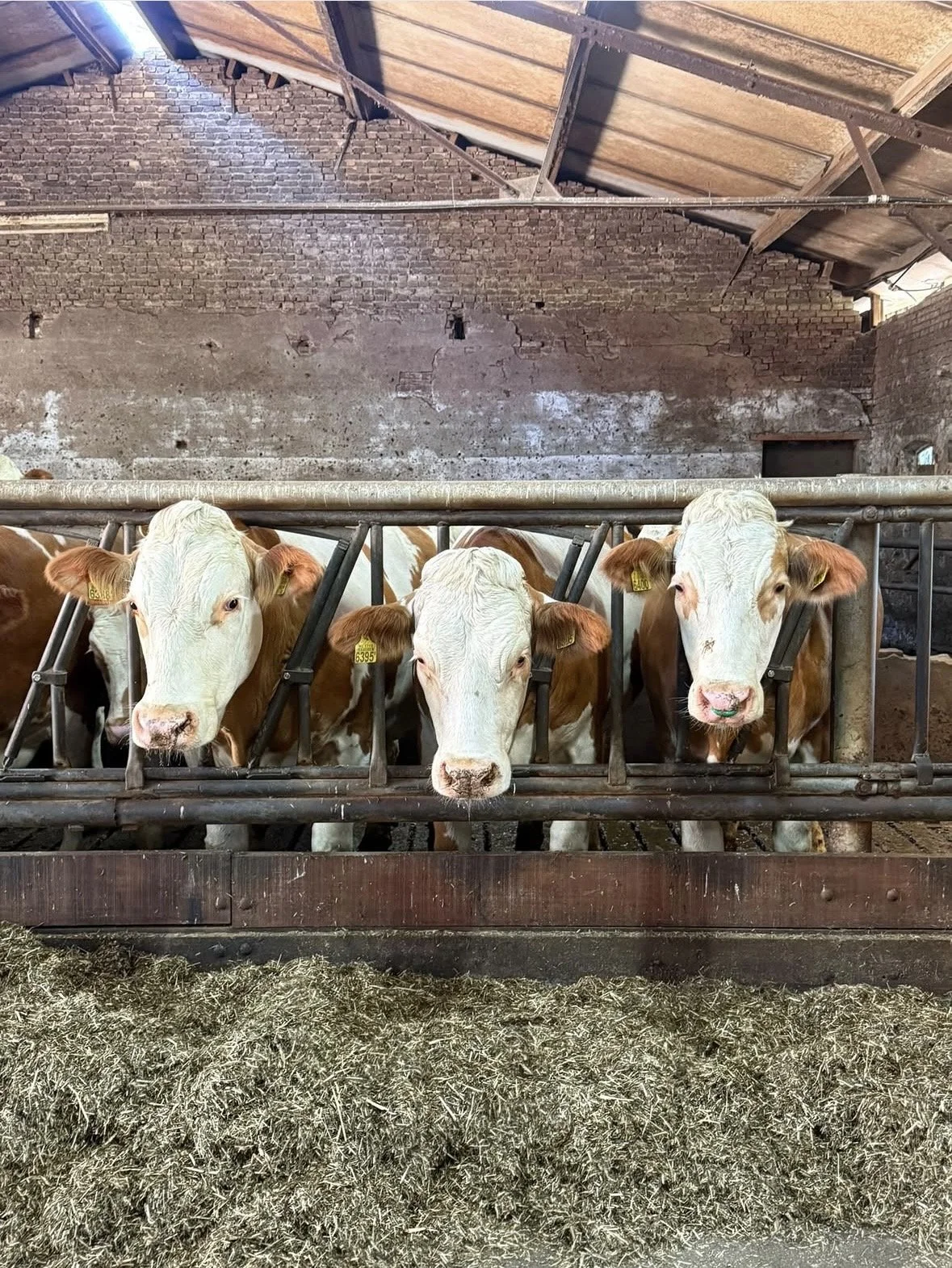
German Dairy Farm Achieves 11,000-Litre Average with Fleckvieh Genetics
After more than 22 years of using Fleckvieh genetics, this progressive German dairy farm is combining high milk yields with cow longevity, robotic milking efficiency and increased value from bull calves and cull cows.
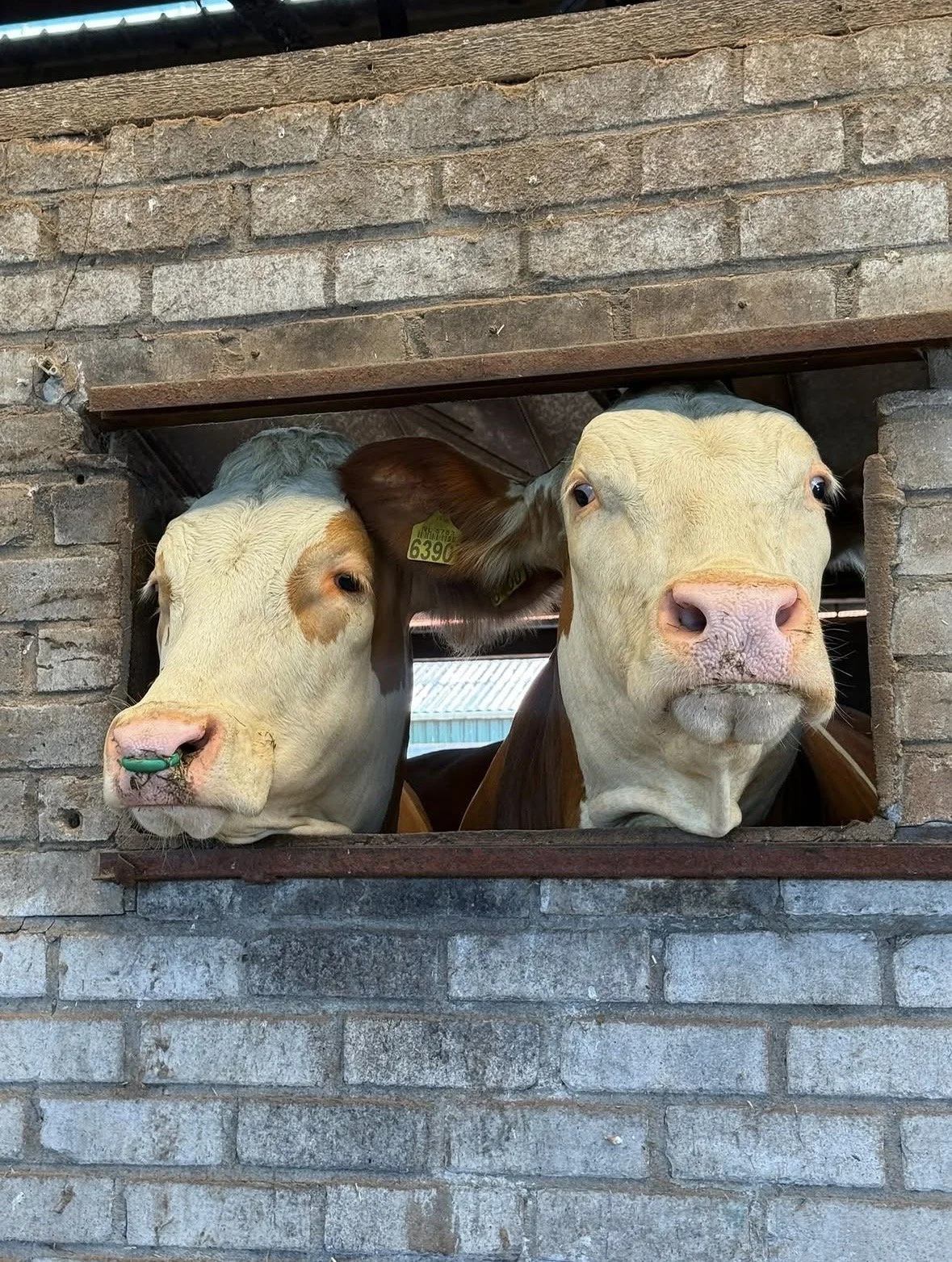
Fleckvieh genetics for dairy herd profitability
Fleckvieh is a dual-purpose cattle breed, making it an option for dairy farmers who want to balance milk production with the value of beef calves and cull cows.
For this farm, that balance was central to the original decision to move to Fleckvieh genetics more than 22 years ago. The aim was not simply to increase milk yield, but to improve the overall profitability of the herd while reducing workload.
Today, the farm reports increased returns through higher-value bull calves and cull cows, alongside significantly reduced veterinary costs.
The breeding strategy reflects a wider approach to dairy herd management: considering the value of the cow throughout her productive life, rather than measuring performance on milk yield alone.
For this German dairy farm, the decision to switch to Fleckvieh genetics was driven by a clear business objective: improve profitability through higher-value bull calves while reducing overall workload.
More than two decades later, the herd demonstrates how a consistent breeding strategy can support both milk production and the wider economics of a dairy enterprise.
The farm now milks 110 cows using robotic milking and feeding systems, with the herd housed throughout the year. Average milk production stands at an impressive 11,000 litres per cow, alongside a 375-day calving interval and an average of five lactations.
These results reflect the farm’s focus on breeding cows that combine production with durability, functionality and suitability for an automated dairy system.
High milk production alongside cow longevity
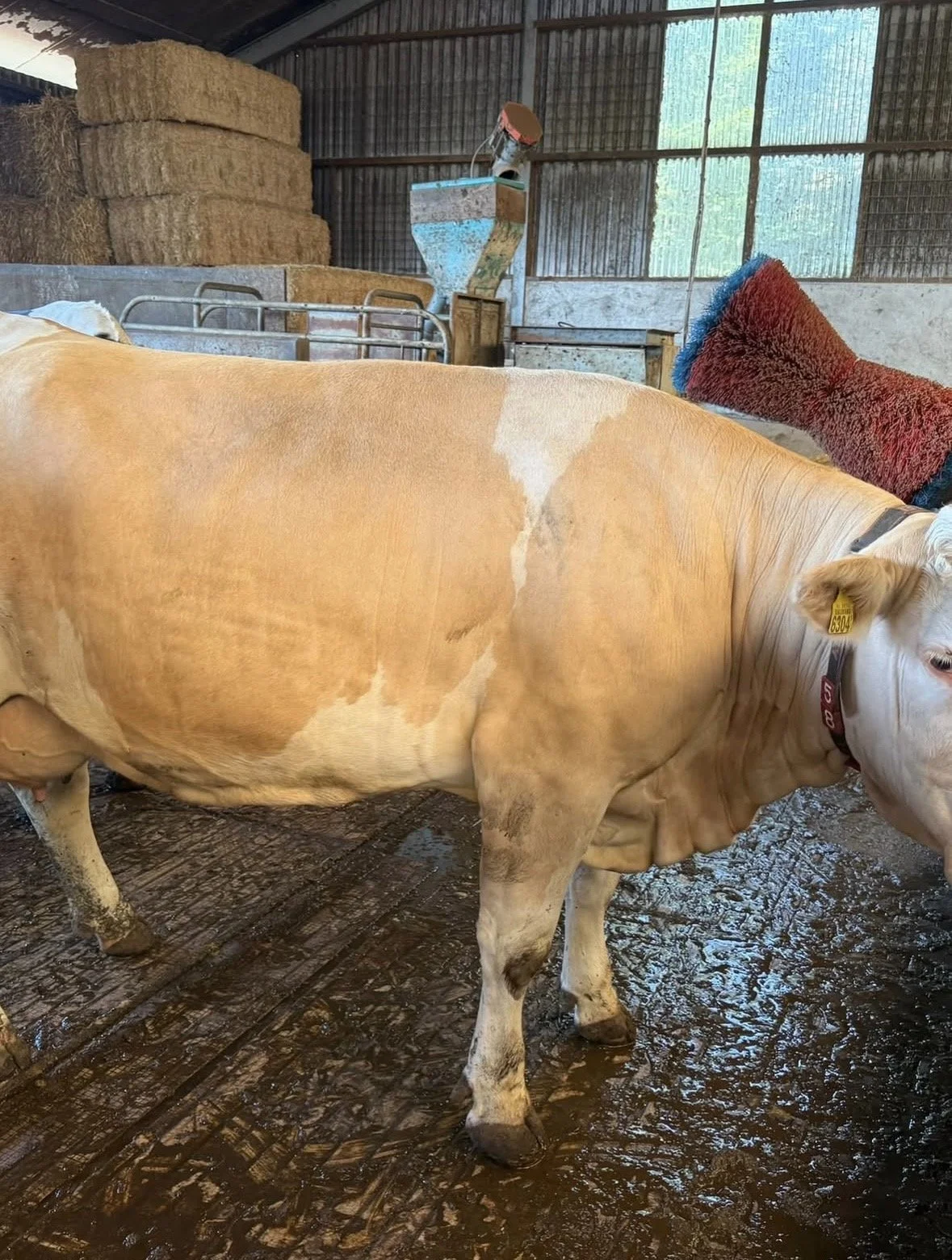
The herd’s current performance highlights the importance of balancing production with longevity.
Key figures from the farm include:
Herd size: 110 milking cows.
Average milk yield: 11,000 litres.
Calving interval: 375 days.
Average longevity: five lactations.
Milking system: robotic milking.
Feeding system: automated feeding.
Housing: cows housed all year round.
Replacement policy: approximately 30 replacement heifers reared each year.
For a farm operating with robotic milking and feeding, cow functionality is an important part of the breeding strategy. Cows need to be suited to the system while contributing to the herd’s production and long-term performance.
An average of five lactations also highlights the farm’s focus on keeping cows productive over multiple lactations, supporting its wider objectives for efficiency and profitability.
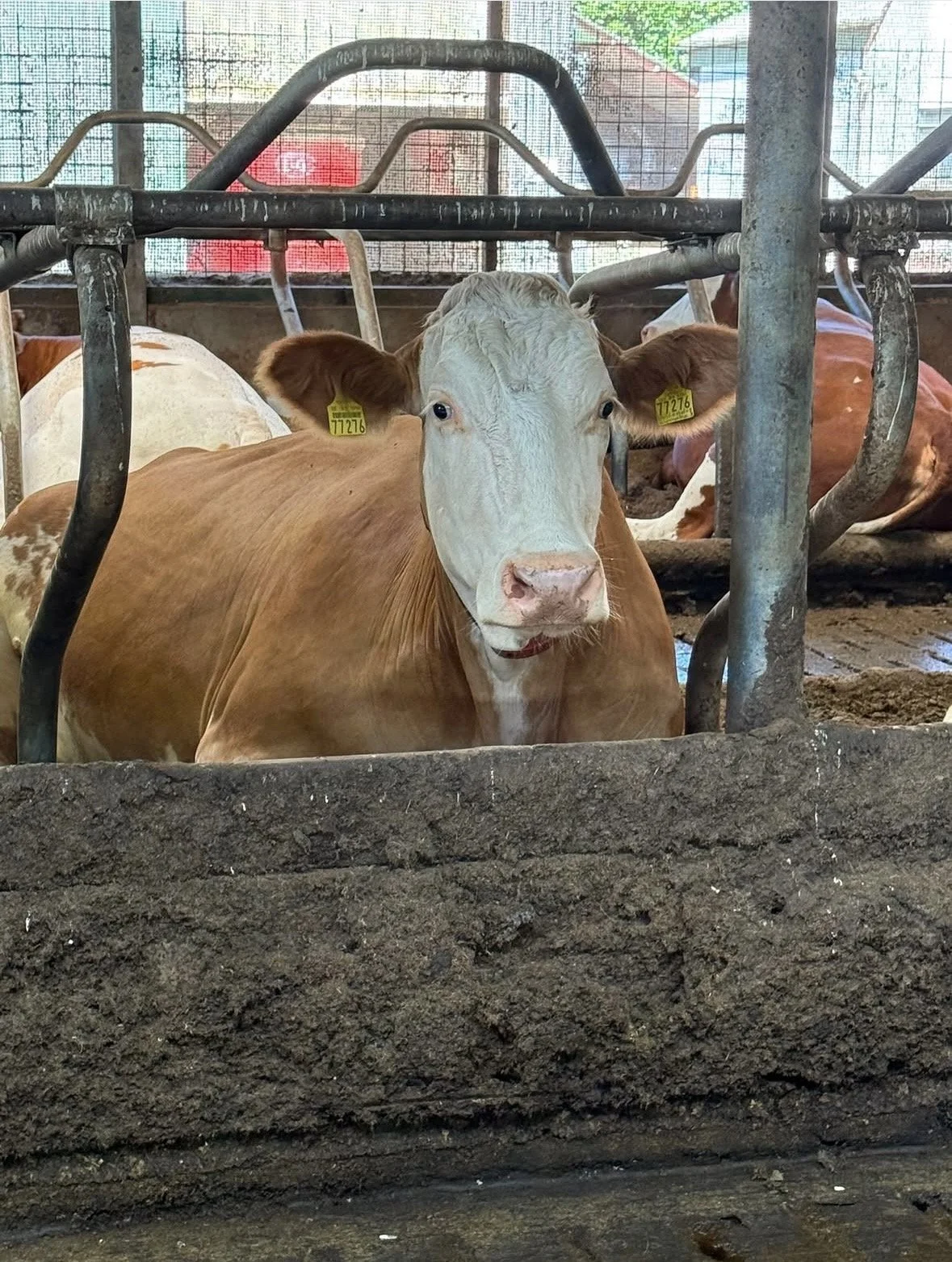
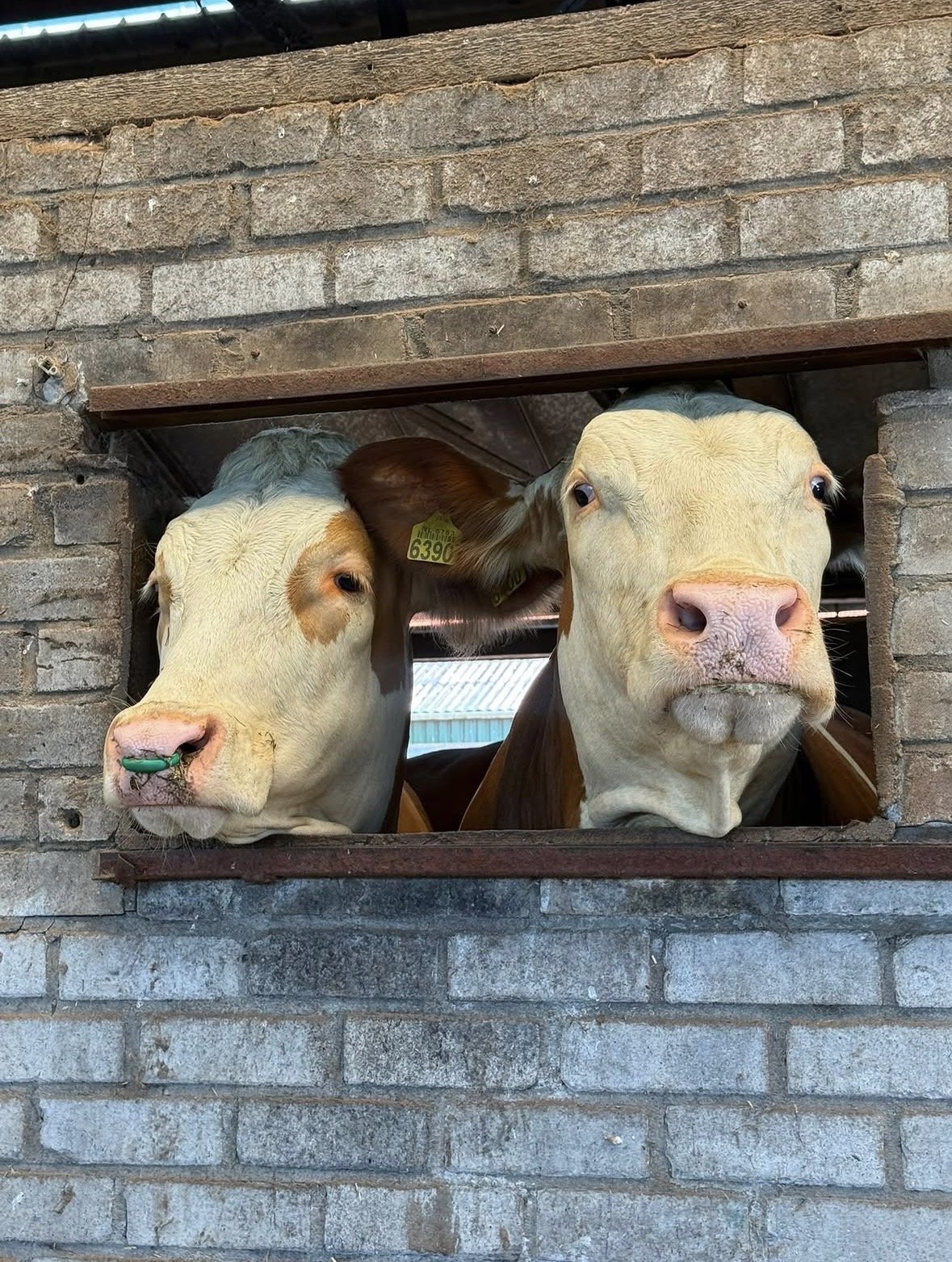
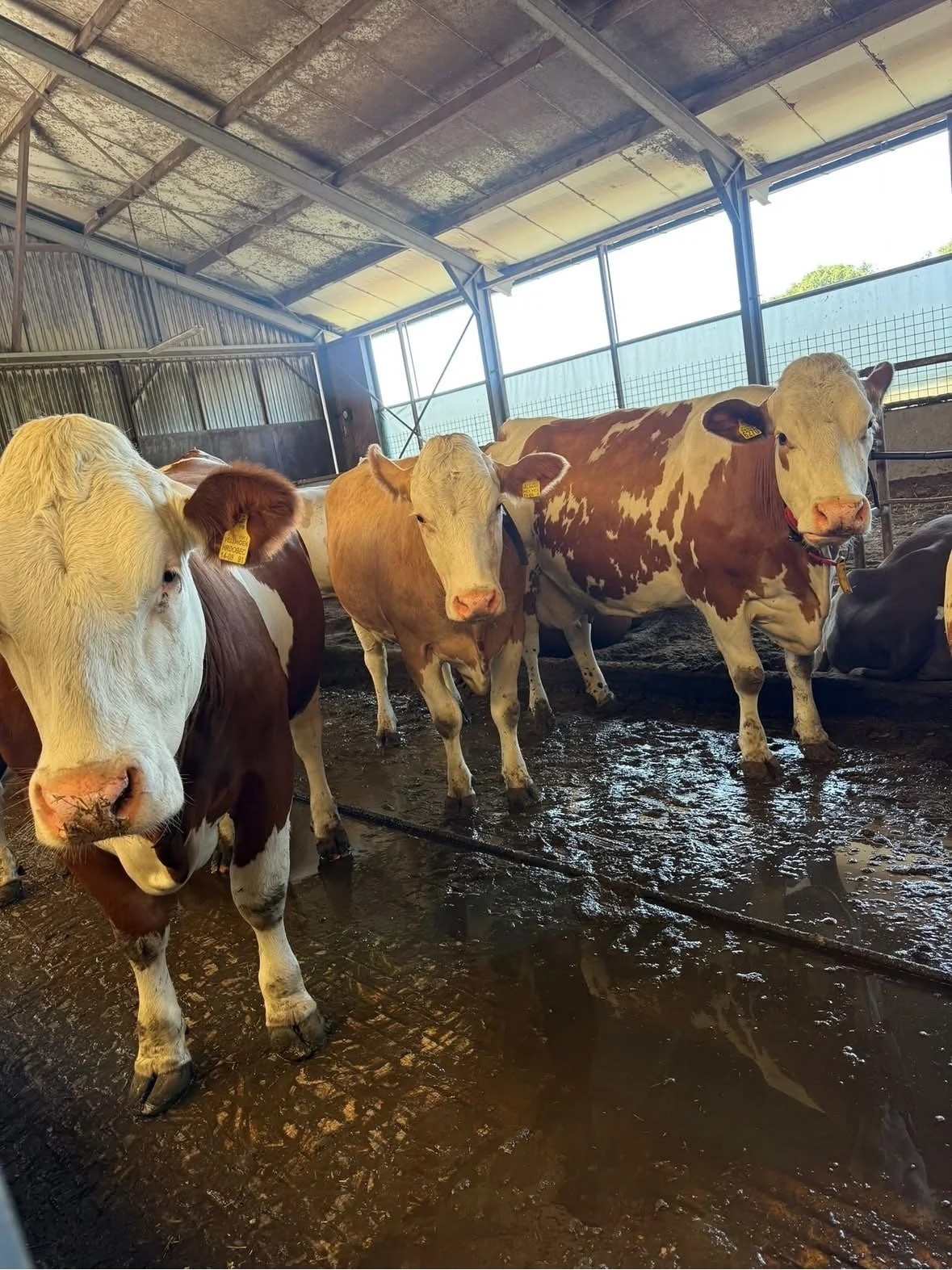
Breeding cows for robotic milking systems
The farm’s breeding priorities are closely linked to the practical demands of its management system.
Rather than selecting genetics solely for milk production, the farmer places particular emphasis on three physical traits:
Strong body length
Body length is an important part of the cow type the farm is aiming to breed, alongside overall strength and functionality.
Sound feet and legs
Good feet and legs are a key breeding priority for cows managed in an automated system, where structural soundness forms part of the wider approach to cow functionality.
Well-attached udders
Functional udders are another important selection objective, reflecting the need for cows suited to robotic milking.
Together, these priorities demonstrate a clear focus on breeding durable, functional cows that fit the farm’s automated production system.
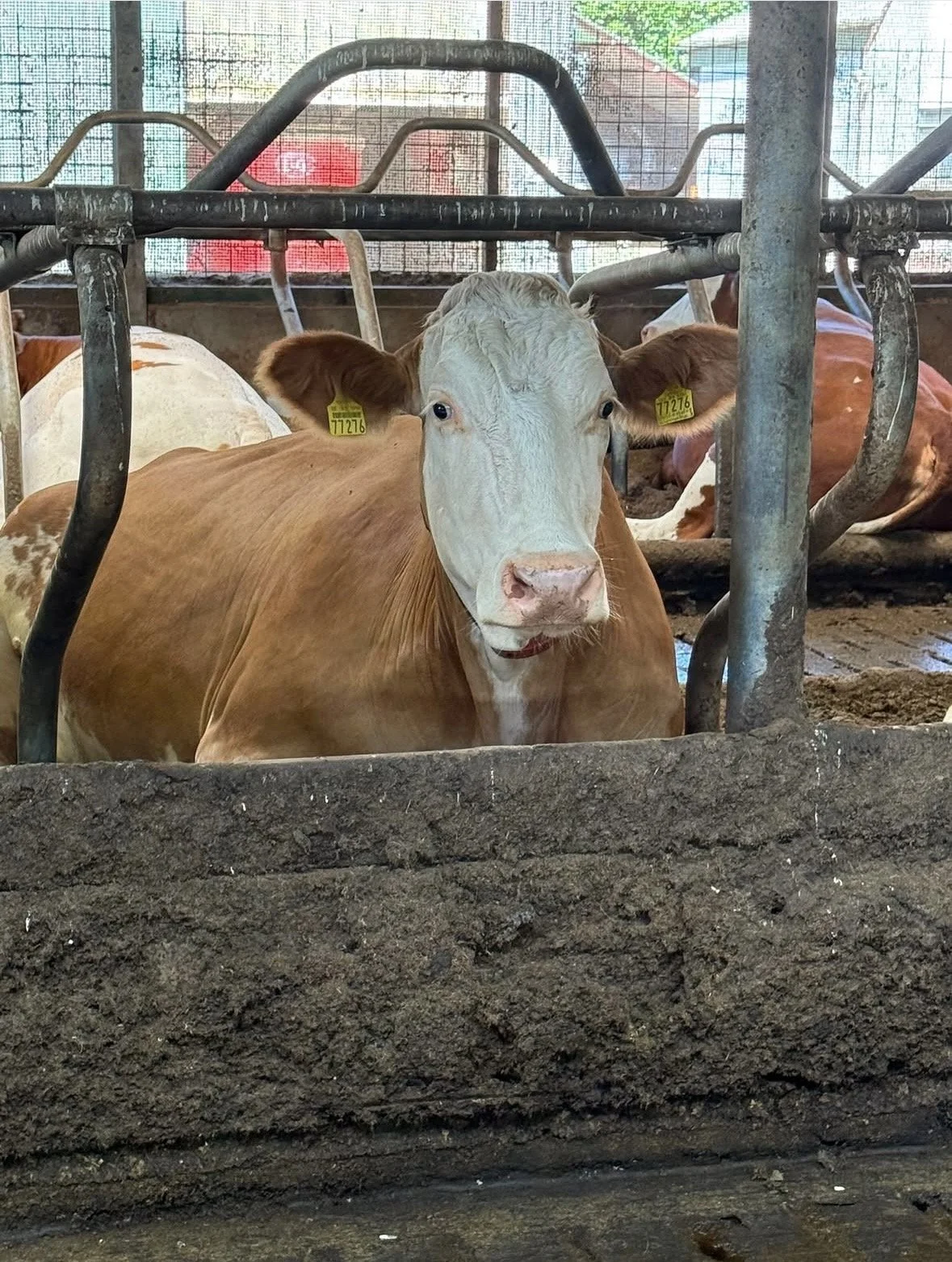
A dual-purpose approach to dairy cattle breeding
One of the key attractions of Fleckvieh genetics for this farm is the opportunity to balance dairy performance with beef value.
Higher-value bull calves and cull cows contribute to the farm’s wider profitability objectives, while milk production remains a central part of the system.
This whole-herd approach considers more than the litres produced during a single lactation. It also takes account of cow longevity, replacement requirements, veterinary costs and the value generated at different stages of the cow’s life.
The farm rears approximately 30 replacement heifers each year, while its reported average of five lactations underlines the importance placed on productive longevity.
Long-term breeding decisions with JMC Genetics
During a recent visit to Germany, the JMC Genetics team saw first-hand how this farm has used Fleckvieh genetics consistently for more than 22 years.
The visit provided a valuable opportunity to understand how breeding objectives are shaped around the realities of modern dairy farming, including automated milking, cow longevity, workload and overall herd profitability.
For UK dairy farmers considering Fleckvieh or other dual-purpose genetics, this farm offers an example of a breeding strategy built around the whole business.
Its experience reinforces an important principle: successful dairy cattle breeding starts with understanding the system, defining the cow you want to produce and selecting genetics that support those long-term goals.